

Do you experience yellowish, shiny painless bumps on your face? You know it can be sebaceous hyperplasia. Keep reading to know more about it and consider getting a professional’s help.
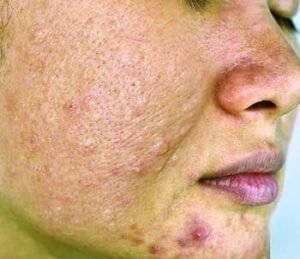
Sebaceous hyperplasia is a skin condition that becomes common with age because it usually affects individuals of middle or older age. Sebaceous hyperplasia occurs when oil glands produce too much sebum that gets trapped under the skin. This results in the formation of bumps. It can be a single or multiple bumps on your skin. However, it is a painless and harmless condition.
Although the exact reason for sebaceous hyperplasia is unknown, it is believed that high levels of circulating androgens can contribute. Apart from that, it is usually observed in oily skin.
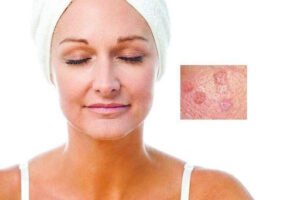
Sebaceous hyperplasia can range in size from 1-4cm. But if it lasts for a longer time, it can look similar to basal cell carcinoma. It is a benign skin condition with no health concerns, except appearance. It can be yellowish or flesh-colored, which can be uncomfortable for many people. But fortunately, it can be treated. Following are some of the treatment options:
- Topical retinol application
- Warm compress
- Photodynamic therapy
- Electrocauterization
- Laser treatment
- Cryotherapy
On the other hand, no matter how long it is left untreated, it does not increase the risk of skin cancer.
Also Read: Why Are Silicone Makeup Blenders Not a Good Choice?
For more Skincare news and Beauty latest updates please Like and Follow our Facebook Page and Instagram account…
 Dr. Iqra Mubashar is a registered Pharmacist originally from Lahore, Pakistan. She has earned her pharmacy degree from the University of veterinary and animal sciences, Lahore. She has completed her internship as a trainee from Children hospital, Lahore. She has completed her research work in clinical pharmacy and pharmaceutics. She has worked as a healthcare documentation head in Al-Qasim enterprises, Islamabad. She has specialized in prescription handling, drugs information, literature research, patient counseling and pharmaceutical care planning. Her research work on coronavirus is under publication.