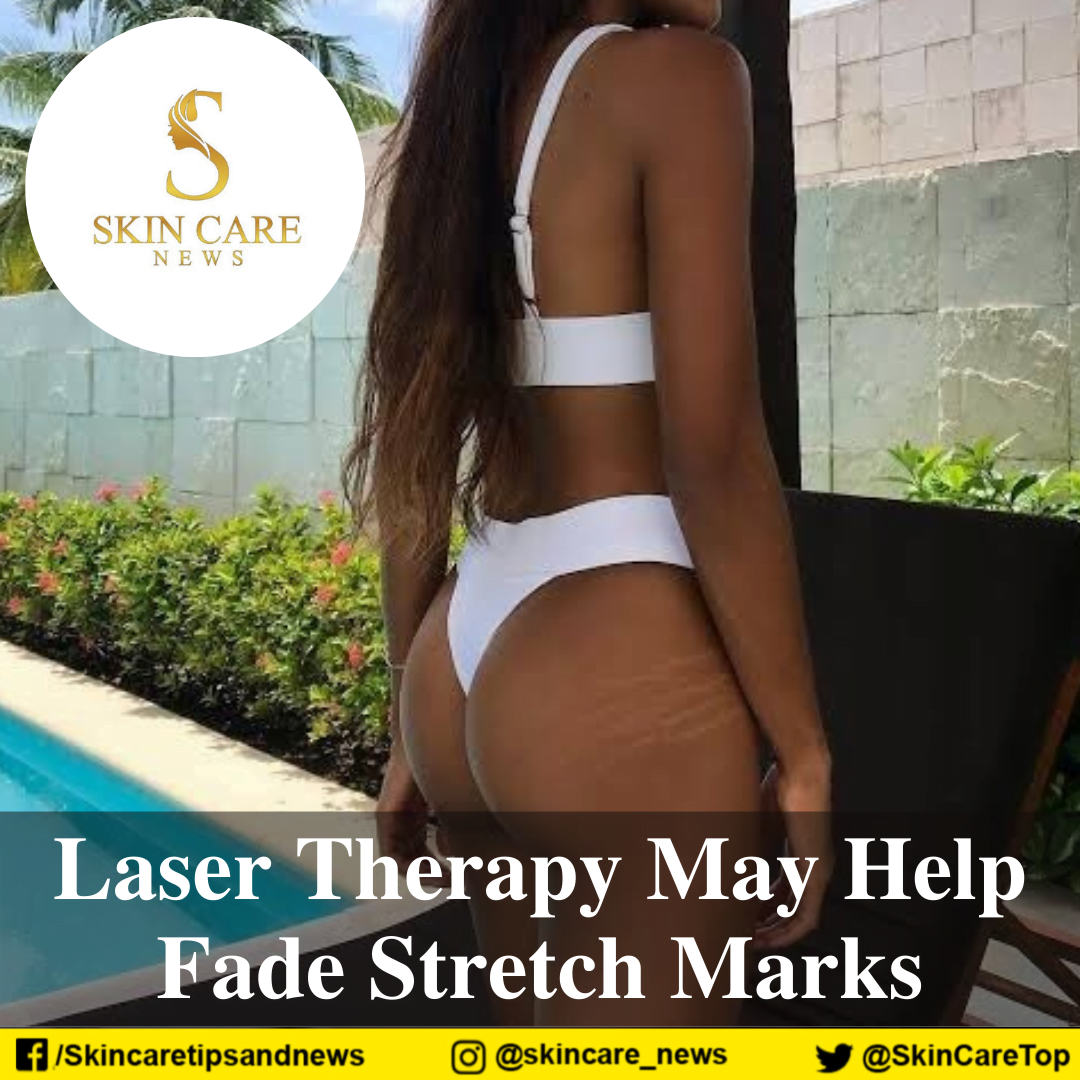
Laser therapy or laser resurfacing treatment is a cosmetic procedure. It is often used for improving the appearance of stubborn stretch marks. It may not completely erase your marks but can enhance their appearance to a great extent.
Most of us are bound to feel skeptical before opting for such procedures, thinking about the results and cost. Let us help you decide by giving you all the information you need on laser stretch mark removal. Scroll down to find how laser therapy may help improve stretch marks, how much it costs, and other factors associated with the therapy.
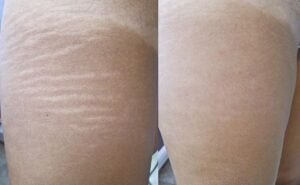
Laser therapy may help improve the appearance of stretch marks. However, results are inconsistent.
This is because the results mostly depend on the severity of the stretch marks, skin type, and medical history. Laser therapy on two different skin types may not give the same results.
Lasers are intense monochromatic lights with different wavelengths. These are targeted on your skin to stimulate the fibroblasts (cells producing collagen and elastin). This boosts collagen and elastin production to cover up the stretch marks or scars.
Collagen and elastin are crucial parts of the basic structure of your skin. They give strength, structure, and elasticity to the skin. Most treatment options for stretch marks, including laser therapy, focus on collagen and elastin production. In the next section, let’s understand how the different types of lasers can help reduce stretch marks.
How Does It Work? What Are The Types Of Lasers Used For Stretch Marks?
Two types of lasers are used for treating stretch marks:
Ablative Lasers: These lasers have a wavelength above 1000 nm. The water in your skin tissues can absorb ablative lasers easily. The most common ablative lasers used for treating stretch marks and scars are CO2 (10,600 nm) and Er.YAG (2940 nm) lasers.
Non-Ablative Lasers: These lasers are as effective as ablative lasers. However, compared to ablative lasers, non-ablative lasers are well-tolerated and patient-friendly. Common non-ablative lasers used for treating stretch marks include Erbium glass (Er glass 1540 nm), pulsed dye laser, Nd: YAG 1064 nm, and 308nm Excimer laser.
Here’s what research has to state about the efficacy of lasers for stretch marks:
1. Pulsed Dye Laser
A study evaluated the effect of a 585-nm flash pump-pulsed dye laser to treat stretch marks on patients between the ages of 23 and 52 years. The study used lasers of different energy densities.
They found that treating stretch marks (10 mm spot) using 3.0 J/cm2 fluence improved the appearance of the marks better than lower frequencies of laser.
2. Excimer Laser
While other lasers focus on promoting collagen and elastin production for treating stretch marks, this laser focuses on repigmentation.
Several studies found that Excimer laser could improve the appearance of stretch marks by re-pigmenting the area.
Read more: https://www.stylecraze.com
Also Read: How Do You Know If Your Skin Is Dehydrated?
A Guide to Choose a Setting Powders
For more Skincare news and Beauty latest updates please Like and Follow our Facebook Page and Instagram account…