
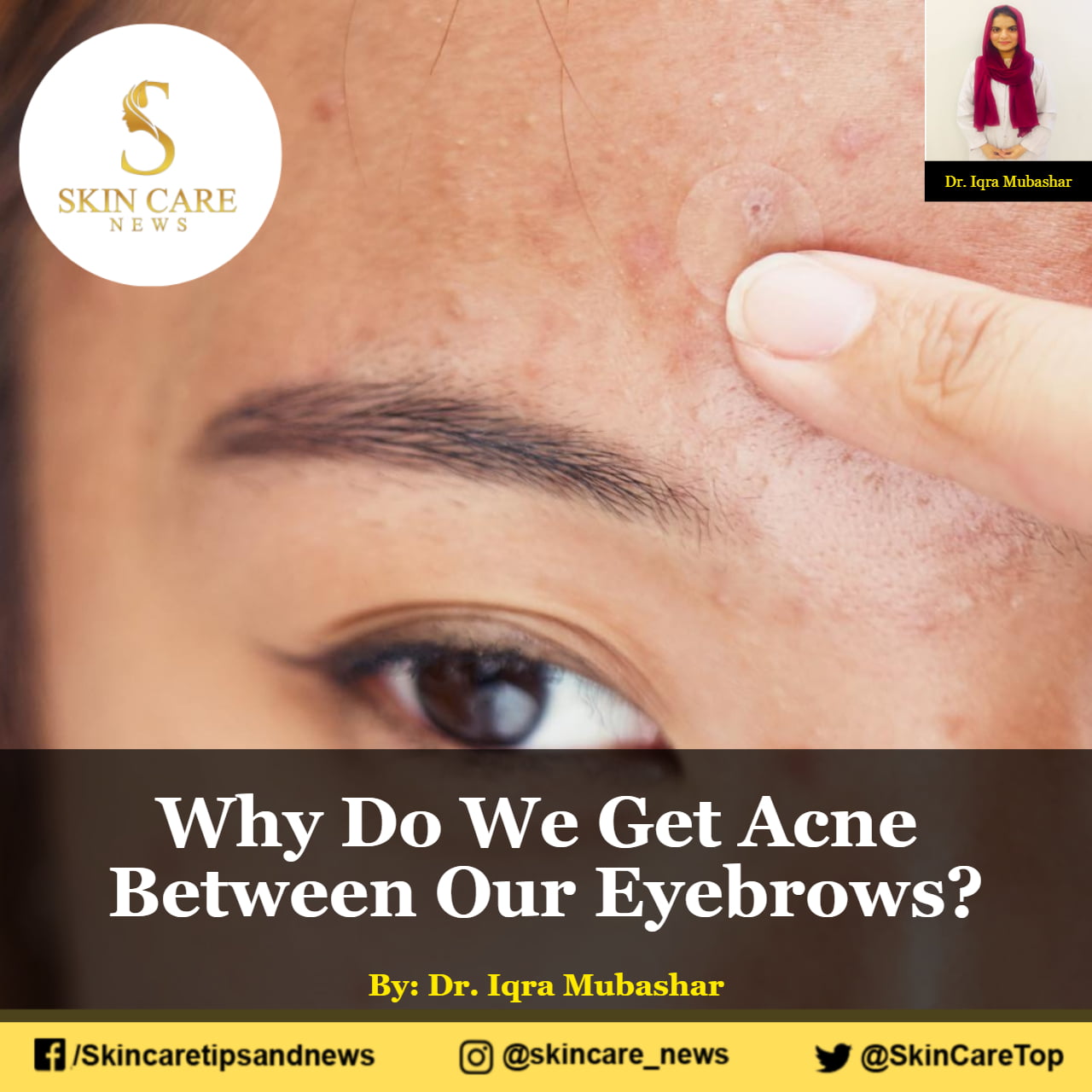
Acne can develop anywhere in our body. But the breakouts between our eyebrows are very annoying. Let’s find out why we get them.

There are many oil glands on our face, particularly on the T-zone, so having acne between the two brows isn’t uncommon. As there are many types of acne, such as pustules, papules, blackheads, and whiteheads, all of them have the tendency to develop between our eyebrows. Most of the common reasons are:
- Clogged pores: Because of oil, sweat, dead skin, or dirt. Hair follicles are also involved.
- Oily skin: Excess oil makes you breakout.
- Ingrown hair: Tweezing, waxing, or partial removal of hair results in ingrown hair, which leads to acne.
- Cosmetics: Brow gels are significantly involved in making you break out. Unclean or dirt makeup brushes play their role too.
- Hormones: Menstruation, menopause, and pregnancy can also result in acne in this area.
- Frequent touching of this area with dirty hands.

Though there’s no scientific evidence available, traditional Chinese connects this area between the eyebrows and liver function. According to this concept, acne in this area indicates liver issues. As the liver is involved in the body’s detoxification, the inability to do this work results in acne between brows. It is suggested that you work on your dietary habits to reduce this acne.
Also Read: What Does It Mean by Vegan Ingredients in Skincare?
For more Skincare news and Beauty latest updates please Like and Follow our Facebook Page and Instagram account…

About the Author: Dr. Iqra Mubashar is a registered Pharmacist originally from Pakistan, Lahore. She has earned her pharmacy degree from the University of veterinary and animal sciences, Lahore. She has completed her internship as a trainee from Children hospital, Lahore. She has completed her research work in clinical pharmacy and pharmaceutics. She has worked as a healthcare documentation head in Al-Qasim enterprises, Islamabad. She has specialized in prescription handling, drugs information, literature research, patient counseling and pharmaceutical care plans. Her research work on coronavirus is under publication.