
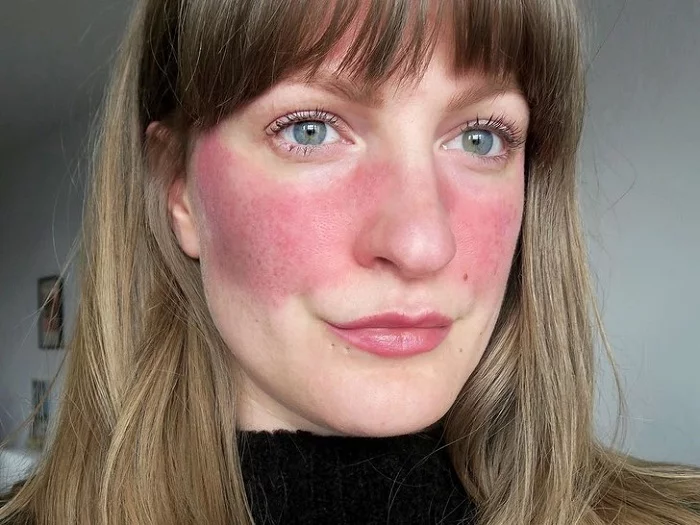
Rosy cheeks have long been perceived as a sign of good health and vigor. Years ago, a rosy glow was a much-coveted physical trait. In Jane Eyre, the title character lamented, “I sometimes regret that I was not handsomer; I sometimes wished to have rosy cheeks, a straight nose, and small cherry mouth.”
The rosiness Charlotte Brontë was referring to is a result of blood vessels widening to allow more blood to flow into the face. This can happen when you’re outside in the cold, as your body attempts to warm your skin. Overheating, after you exercise or drink a hot beverage, can also cause flushing. Nervousness or embarrassment, in which case it’s called blushing, can also turn your cheeks red. Some people blush or flush more easily than others.
Although a ruddy complexion isn’t necessarily a sign that you’re healthy, it’s generally nothing to worry about, either. That said, sometimes red cheeks can be a warning sign of an underlying medical condition.
Keep reading to learn more about why your cheeks are rosy, other symptoms to watch for, and when to see your doctor.
Rosacea affects more than 16 million Americans. Many of them don’t realize they have this skin condition because its symptoms look like blushing or flushing.
In rosacea, blood vessels in your face enlarge, allowing more blood to flow into your cheeks.
In addition to redness, you may also have:
- visible blood vessels
- red, pus-filled bumps that look like acne
- warm skin
- swollen, red eyelids
- a bulbous nose Read more