
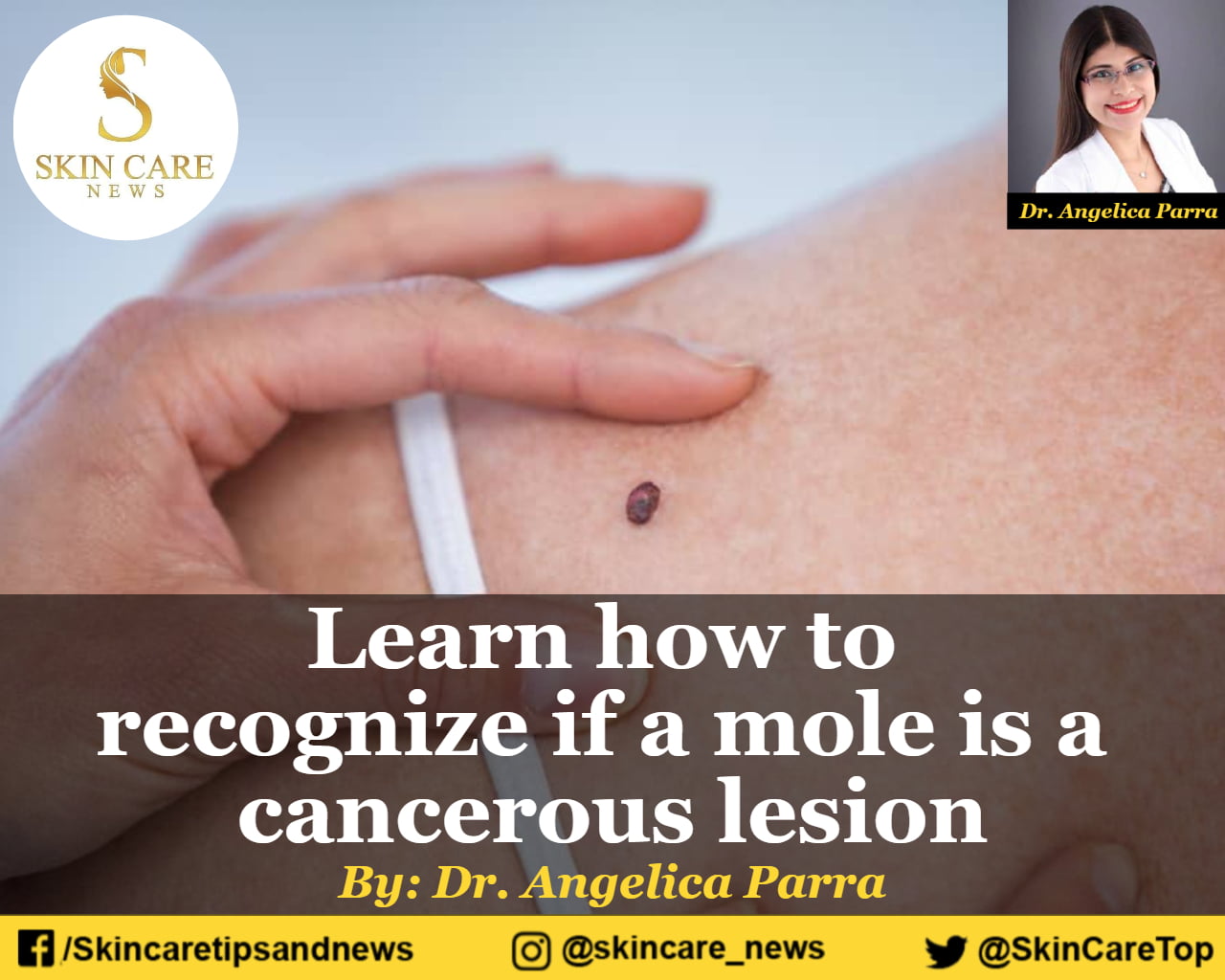
The premature examination of moles is one of the most effective ways to prevent Melanoma, one of the most common skin cancers. Nowadays, even with the importance of sunscreen and skin cancer prevention, some people still opt for longer sun exposure and artificial tanning, which only increases your chances of skin cancer. mole
It is important to know which other activities can increase your risk of skin cancer.
Hence here we will mention the people with a higher risk of Melanoma:
- Darker birthmarks.
- The family tendency of Melanoma.
- Lower Fitzpatrick (lighter skins tones).
- People with multiple moles.
- Multiple sunburns through the years.
- Lighter eye colors.
Learn how to recognize if a mole is a cancerous lesion with the ABC’s of skin cancer:
- A for Asymmetry: Both halves of the mole don’t look alike.
- B for Border: Irregular, poorly defined and scalloped.
- C for Color: Varying colors in the different areas of the moles, combined with red or blue colors.
- D for Diameter: A mole bigger than 6mm has a higher risk of Melanoma.
- E for Evolving: If the mole has changed color, shape, or size and looks different from the rest of the moles around.
If you recognize the characteristics previously mentioned in the ABCDE, you must consult with a dermatologist to further study the mole.
Also Read: Anti-Pollution Skincare: Why Do We Need Them?
For more Skincare news and Beauty latest updates please Like and Follow our Facebook Page and Instagram account…
 About the Author: Dr. Angelica Parra is a Licensed Medical Doctor from Venezuela and is currently taking a Master’s degree in Dermatology. She specialized in Aesthetic Medicine and completed Advanced Training in Non-surgical Facial Rejuvenation in Miami, Florida. She has specialized in applying Botox, dermal fillers, skin tightening treatments, and since then, she has worked on cruise ships as an Aesthetic Doctor.