
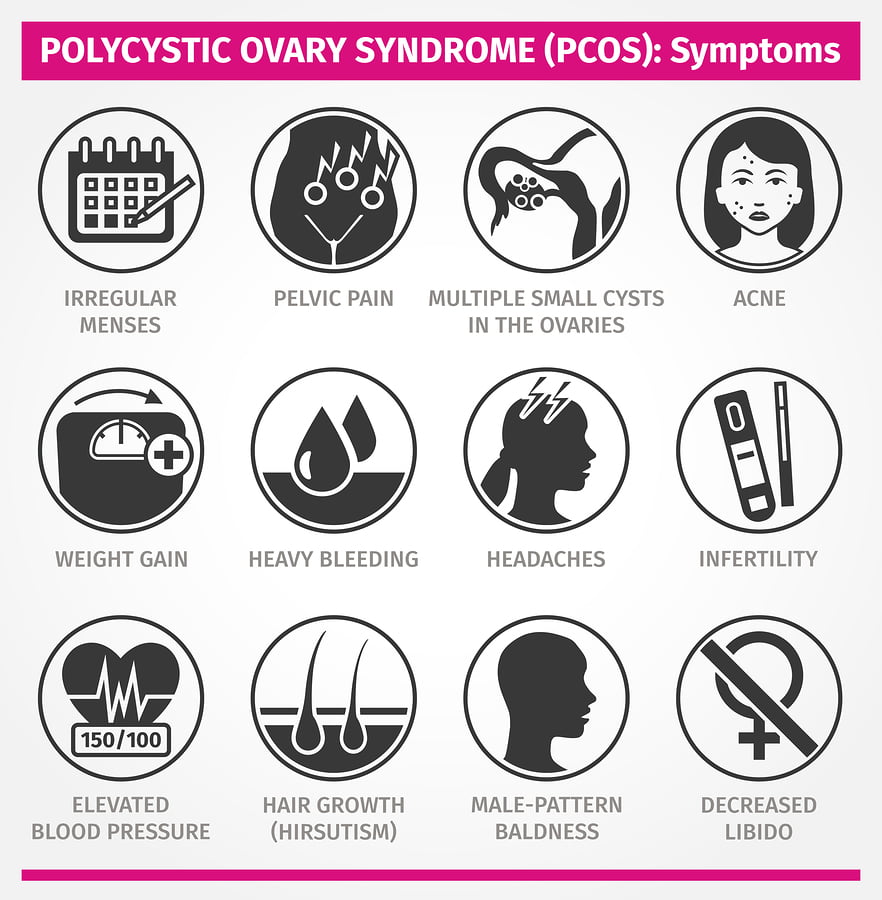
Polycystic Ovary Syndrome (PCOS) is a hormonal condition frequently seen in women during reproductive age. Women with this syndrome usually suffer from amenorrhea; meaning they can skip their period or no period at all for a long time. Also, they can suffer from hormonal imbalance, like androgen excess.
The cause of this syndrome is still not very clear, but treatments are available to improve the symptoms that come with it. There’s no cure for PCOS, but the symptoms can be treated. Hormonal changes don’t allow the ovaries to release mature ovules; hence fertility problems are common. Early treatment can help prevent infertility, cardiac diseases, or metabolic disorders like type 2 diabetes or insulin resistance.
Signs of Polycystic Ovary Syndrome in the skin
- Hirsutism: there is an excessive hair grown in areas where the hair should not be typically growing, most of the time in the face and chest.
- Oily skin: due to the increase in size and function of the sebaceous glands
- Acne: mostly in areas like face, neck, chest, and back
- Acanthosis nigricans: skin hyperpigmentation in specific areas of the body like the neck, underarm, and groin is related to insulin resistance
- Hair loss: this usually have a masculine pattern
Signs and symptoms of PCOS often develop around the time of the first menstrual period during puberty. Sometimes PCOS develops later, for example, in response to substantial weight gain.
How do I know If I suffer from PCOS?
If you noticed that your period is irregular and you suffer from one of the previous conditions described, it is possible that you have Polycystic ovaries. An ultrasound of the pelvic area and a hormonal test will confirm this.
Remember to go for a consultation with your physician, he might order a full hormonal study. Most of the time, just a simple treatment can improve these signs and symptoms.
READ MORE!

 is a hormonal condition frequently seen in women during reproductive age. Women with this syndrome ...)