
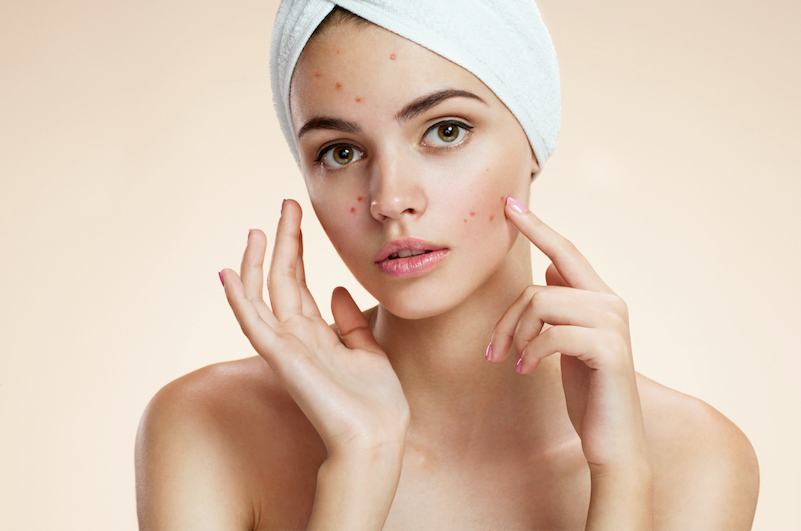
Cleanse, treat, protect
This is a simple routine to help manage acne. Add to this some tips on what to avoid and how to use make-up to camouflage those spots and you’ve got the keys to good skin care.
Follow the skin care steps and recommendations below – unless your health professional says otherwise.
Cleanse
To stop redness, help skin heal and reduce oil production it is essential to wash once or twice a day with an appropriate cleanser.
Look for a mild ‘soap free’ liquid face cleanser that’s pH balanced at 5.5 or slightly acidic to match that of the skin. It should also be free of abrasives, detergents and alcohol.
If you have oily skin, look for a cleanser with ‘high rinsability’. It won’t leave a surface film and contains only enough moisturiser to protect the skin from irritation and damage during cleansing. Options include Cetaphil Oil Control Foam Wash.
If you have combination, dry, sensitive or irritated skin, or if you’re using acne treatments containing benzoyl peroxide, tretinoin, adapalene and/or tazarotene, look for a ‘gentle oil-free plus moisturising’ liquid cleanser.
Moisturising liquid cleansers have added moisturisers (e.g. cetyl alcohol or glycerine) that help protect the skin and speed up its repair and recovery if it’s dry and irritated. Examples include Cetaphil Gentle Skin Cleanser and Neutrogena Visibly Clear.
It’s best to avoid moisturising cleansers that have high levels of paraffin, mineral or fragrant ‘natural’ oils.
Salicylic acid containing cleansers
Salicylic acid works by getting into sebum – where it’s needed to help unblock pores. Cleansing products that contain salicylic acid are available from Neutrogena, L’Oreal and Garnier.
Salicylic acid helps dissolve, remove and prevent the formation of the keratin plug, which can help speed up the clearing of pimples and improve long-term control.
For people with mild acne, a cleanser with salicylic acid might be all you need for your everyday control of acne. Remember to speak with a pharmacist or doctor before combining this with any other medicated products (such as prescription acne products or those containing benzoyl peroxide).
Treat
This includes over the counter creams, gels or lotions, and those prescribed by your GP or dermatologist.
It’s best to apply these after your skin has completely dried after cleansing. If treatments are applied to moist skin they’re more likely to cause irritation.
You’ll get the greatest benefit if you apply your acne cream, gel or lotion to the entire skin region where you normally develop pimples. This is because these treatments also help to prevent new pimples from forming. A small pea-sized amount is usually all you need to treat the entire face.
Be careful not to apply these treatments to sensitive skin areas (which are not usually affected by acne) such as the skin immediately around your eyes, lips and nostrils.
It’s important to follow the instructions for applying these treatments and to be aware of any possible side effects such as increased sensitivity to the sun or possible staining of clothing.
Protect
This step includes using make-up and/or sunscreen during the day and possibly a moisturiser at night to protect your skin against environmental factors such as sunlight, wind, pollution and dryness.
Make-up, moisturisers and sunscreens should be applied on top of your morning or evening acne treatments.
Many moisturisers and cosmetic products can worsen or cause acne. Products labelled ‘oil free’ and suitable for ‘acne prone skin’ are a good start, but even some of these can make acne worse for some people.
Products labelled ‘non-comedogenic’ have been specially tested in people prone to acne and proven not to clog pores and worsen acne. These are the best products for you to try. You may have to trial a few before finding one that suits you.
If you’re having trouble finding moisturisers, make-up and/or sunscreens suitable for your skin, a dermatologist is your best source of advice.