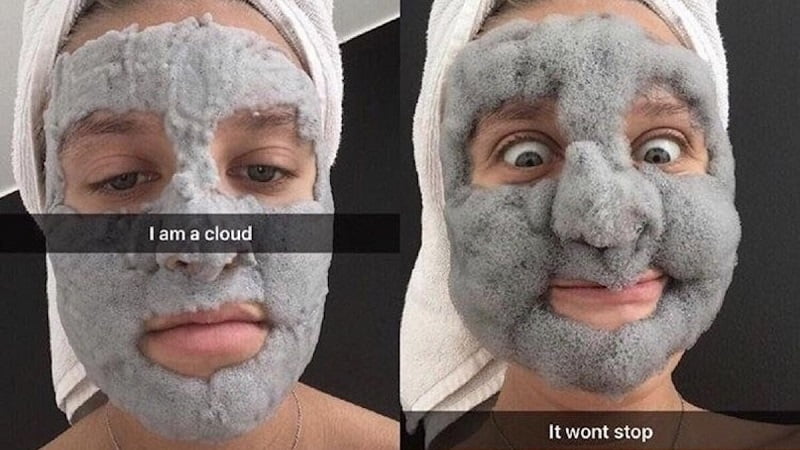
Our story starts with an unforgettable meme going around a few months ago. A woman had tried a bubble mask for the first time, and it had puffed up into an uncanny impression of The Michelin Man. Diligent K-beauty lovers identified the mask in question as the Elizavecca Milky Piggy Carbonated Bubble Masks, Lucy Hale did a demo, and ever since, more brands have followed suit with their own versions. They’re even popping up in sheet mask form from brands like GlamGlow and Rodial.
But let’s take a step back for a sec. Are bubble masks just a fun gimmick? the next peel-off mask made to inspire a thousand Insta stories? (This girl, never forget.) Or does science deliver?
According to experts, it’s a mixed bag. Cosmetic chemist Stephen Alain Ko says that in general the new sheet masks and the original bubble masks are based around oxygen’s proven positives when it’s used in labs and hospitals. Under the right conditions, good ol’ oxygen can help wounds heal by increasing circulation, which gets more cells where they need to go to help you recover. As we get older, our circulation decreases, so oxygen can make up for that. And in the process, it can up your collagen production for plump, bouncy skin. That reasoning is why celebrity aestheticians like Joanna Vargas do treatments like oxygen facials in-office, she says.
The tricky part is re-creating those conditions at home, Ko says. Bubbling, oxygenating masks actually rely on other ingredients to preserve their bubble action until the right time.
Also Read: How To Get Rid Of Cystic Acne, According To Dermatologists