
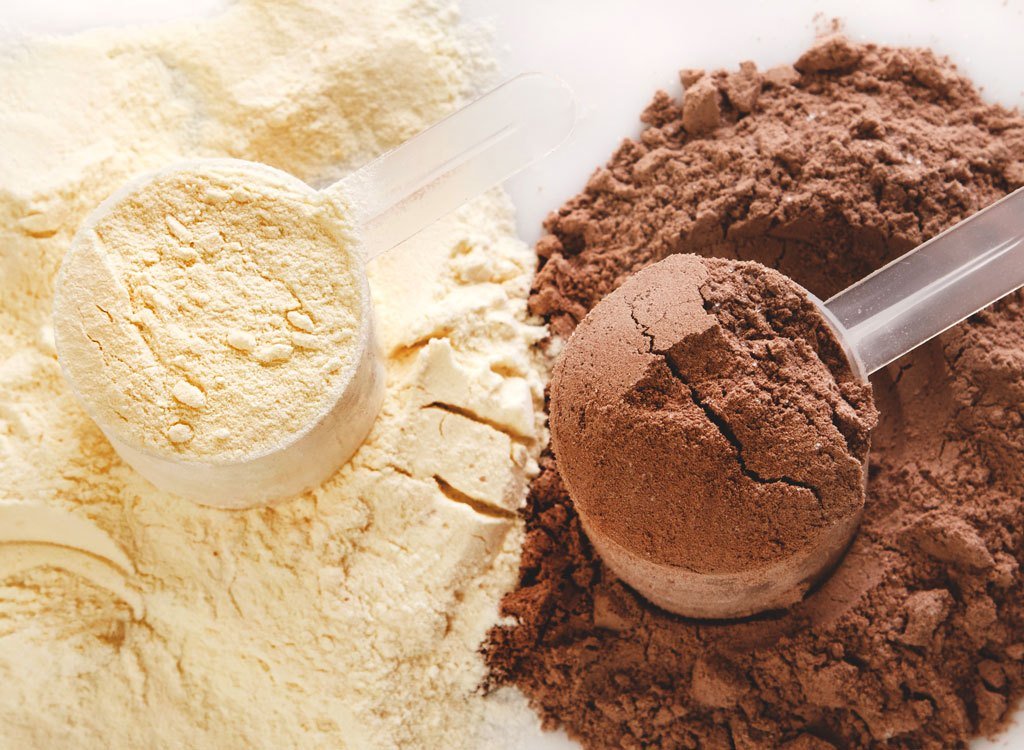
Protein is a critical nutrient that your body uses to create new enzymes, muscle tissue, and hormones. Indeed, protein is found in every cell in the human body, meaning that you need to get plenty of it in your diet to ensure that your body continues to function properly. Each protein molecule is made up of amino acids, the building blocks that are strung together on chains to form protein. After digesting dietary protein, your body rearranges these amino acids to create new protein structures needed to perform various physiological processes.
What Are Soy Protein & Whey Protein?
Soybeans are a type of legume that are naturally high while remaining relatively low in fat. To create soy protein, manufacturers grind soybeans into a meal which contains no hulls or fat. This soybean meal is then processed into soy protein isolate, which consists of 90 to 95% protein. This isolate is then sold in powder form. The soy protein powder can be used to make a protein shake or to add protein to other meals. Although is naturally high in protein but very low in carbohydrates, many manufacturers add additional nutrients to commercial soy protein to improve its taste, texture, and nutritional value.
Considerations When Choosing Between Soy and Whey Protein:
There are many considerations when choosing between soy protein and whey protein. Although these factors differ by brand, the following are some broad considerations when choosing a type of protein powder.
Taste and Texture
Whey tends to have a smooth, somewhat creamy texture and a mildly nutty taste. Soy protein has a stronger nutty flavor, and some people find the texture a bit grainier. In the end, the taste and texture of soy versus whey comes down to personal preference. Both are available in a variety of flavors and formulations. Certain brands may include additives or stabilizers that are meant to achieve a creamier, richer texture. Trying several brands before choosing one can help you avoid protein powder with an off-putting “chalky” texture.
Shelf Life
Both soy and whey protein are processed so that they are relatively shelf stable. Despite being derived from milk products, you do not need to worry about whey protein powder going bad quickly. A typical container of protein powder has an expiration date that is a year or more away .However, you are unlikely to suffer any ill health effects from using protein past its “sell by” date. Although the flavor of the product might diminish, the nutritional value and stability of the product is unlikely to change.
Type of Protein
One of the most important factors to look at when evaluating a protein powder product is the amino acid profile. There are 22 types of amino acids used by the human body; nine of these cannot be synthesized by the body and must be obtained from dietary sources. Both soy and whey protein are “complete” proteins, meaning that they contain these nine essential amino acids. However, they differ slightly in their relative concentrations of the essential amino acids. For example, whey protein tends to be higher in leucine, leucine, methionine, and Elysian . In contrast, soy protein is higher than whey protein in arginine, phenylalanine, and tryptophan.Read More..