
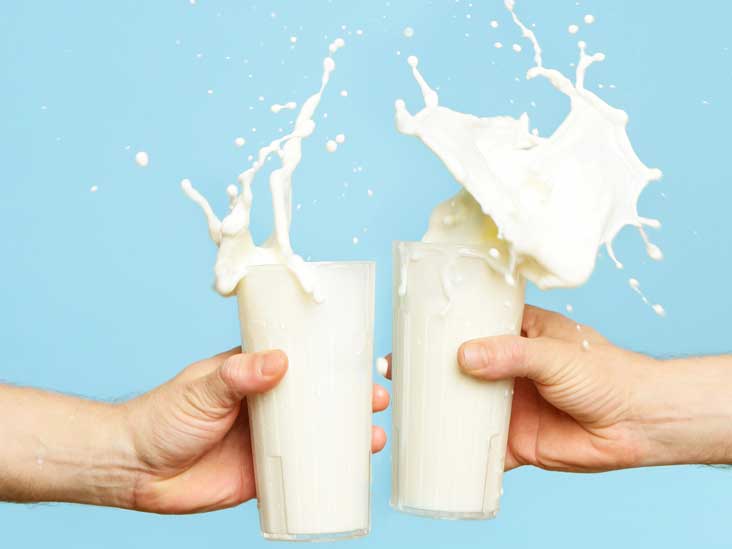
Better: Skim milk has been considered a classic breakfast staple for decades. However, it has also become a controversial ingredient, with new studies emerging left and right discussing either why skim milk is bad or debating its potential impact on bone strength, heart health and more.
What Is Skim Milk?
Take a stroll down the dairy aisle of your local supermarket and you may notice that there are several types of milk available, each of which varies based on its respective fat content.
What Is Whole milk?
It contains the highest amount of fat, with around 3.25 percent milk fat. Meanwhile, low-fat and skim milk are each produced by removing a portion of the fat from whole milk, resulting in a final product that Better is lower in total fat and calories.
Differences of Skim Milk vs. Whole Milk
The main difference between skim milk vs. whole milk is the fat content. Whole milk has not been altered or modified in any way, whereas other varieties like low-fat or skim milk are produced by removing a portion of fat from the milk. While whole milk usually contains approximately 3.25 percent milk fat, skim varieties generally contain less than 0.5 percent.
Nutrition Facts:
One cup of non-fat milk contains the following nutrients:
- 86 calories
- 12.5 grams carbohydrate
- 8.5 grams protein
- 0.5 grams fat
- 301 milligrams calcium (30 percent DV)
- 247 milligrams phosphorus (25 percent DV)
- 0.3 milligrams riboflavin (20 percent DV)
- 0.9 micrograms vitamin B12 (16 percent DV)
- 407 milligrams potassium (12 percent DV)
- 0.8 milligrams pantothenic acid (8 percent DV)Read More..
Also Read: Top 15 Potassium-Rich Foods to Start Eating Today
ss.ss