
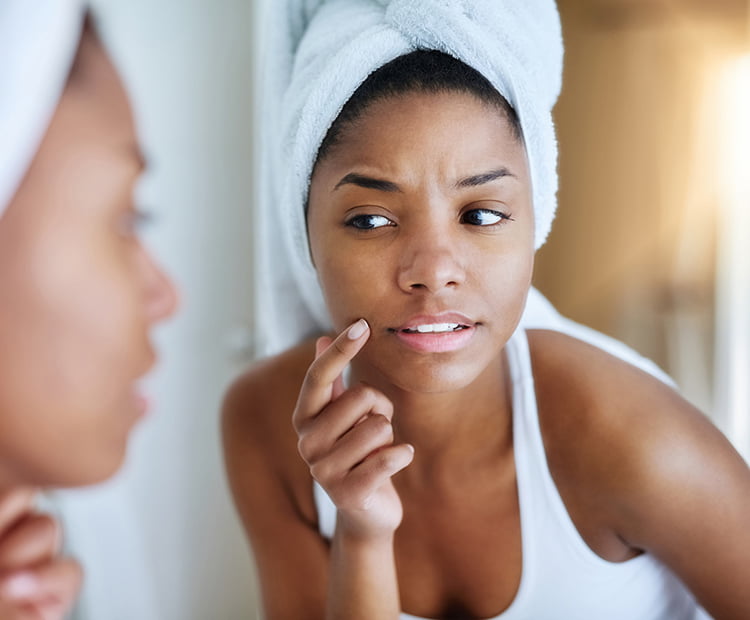
You aren’t the only one experiencing breakouts these days. While teenage acne is, of course, common, it’s more shocking to hear that 54 percent of women age 25. And according to the International Dermal Institute, clinical studies show that between 40 and 55 percent of the adult population are diagnosed with low-grade, persistent acne and/or oily skin at some point.
Thankfully, treatments are readily available. The hardest part may be identifying the types of products and medications that work best for your skin. To help, we’ve enlisted top dermatologists to put together a guide to common types of acne and the best options for treatment. Clear skin, here you come.
What commonly causes acne?
While it’s clear that more adults are breaking out these days, it’s not always clear what is causing the surge in adult acne. “Acne can be caused by a wide range of things,” says Dr. Paul Lorenc, board-certified aesthetic plastic surgeon in New York City. “Hormonal acne is more common in women and happens during puberty. There’s also acne caused by rosacea, stress, certain medications and bad hygiene.”
Scientifically speaking, there’s a lot going on underneath the skin that leads to breakouts, adds Dr. Heather Woolery-Lloyd, a board-certified dermatologist in Miami. “Basically, the ‘pores’ in our skin are lined by skin cells called keratinocytes. In normal skin, those keratinocytes naturally slough out of the pore easily. However, in acne, the keratocytes become very sticky and they build up in the lining of the pore to form a pimple,” she explains. “This looks like a whitehead or blackhead. Many things can cause the lining of the pore to get sticky.”
Most commonly, hormones are the culprit, Lloyd says. That’s why you’ll likely notice breakouts around your monthly cycle. “As the lining of the pore becomes more sticky, oil and bacteria build up inside of the pore. This is when you see papules and cysts under the skin.”
Also Read: How to Choose a Treatment for Thin Skin Under Eyes