
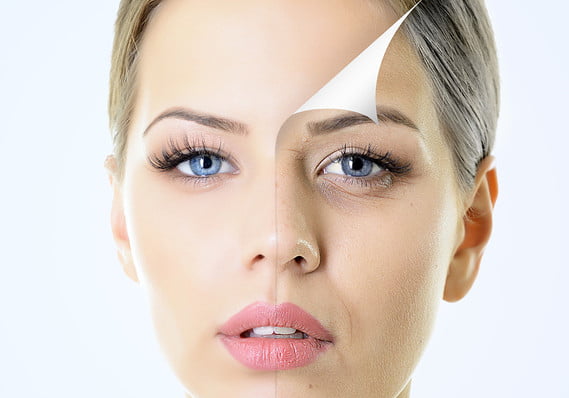
Premature aging syndromes, also known as progeria, include two very rare inherited conditions, Hutchinson-Gilford syndrome and Werner syndrome. In both conditions, skin changes that indicate premature aging include: Atrophy Loss of cutaneous fat.
Things to consider
As you get older, your body’s internal processes — from skin cell turnover to workout recovery — slow down and take longer to complete or recharge.
This leaves room for signs of aging, such as wrinkles and fatigue, to occur.
These changes may be surprising if they happen earlier than expected, hence the term “premature” aging.
It’s impossible to avoid these changes completely, but there are ways to reduce the signs of aging in your body — especially if they’re happening before you’re ready to embrace them.
What are the signs of premature aging?
The aging process looks different for everyone, but there are certain signs of aging that are considered “premature” if you notice them before you turn 35.
Sun spots
Sun spots, also called age spots and liver spots, are flat spots on your skin caused by years of sun exposure.
These hyper-pigmented spots may develop on your face, the back of your hands, or your forearms.
Gaunt hands
Over time, the top layers of your skin become thinner and contain fewer structuring proteins, such as collagen, that give your skin its shape.
Your hands may start to appear more veiny, thin, and prone to wrinkles as a result.
There’s no objective metric for when hands start looking older, but most people tend to notice it during their late 30s and early 40s.
Inflammation or hyperpigmentation along chest
Many people develop patchy discoloration on their chest as they get older.
Similar to sunspots, these areas of differing pigment can be caused by damage to your cells from sun exposure.
This kind of hyperpigmentation isn’t always connected to aging. It can be the result of eczema or other skin conditions that damage the melanin cells in your skin.
Dry or itchy skin
Dry or itchy skin may happen more frequently

Wrinkles or sagging
As you enter your 30s, your skin slows down its production of collagen, the protein that gives your skin its shape. Collagen is what helps your skin bounce back and stay plump.
With less collagen in the skin, it’s easier for visible wrinkles and sagging to occur. You might notice this happening more in areas around frequently used muscles, like the forehead, or where you’re more exposed to the sun.
The age when people first notice wrinkles varies, with little standard for when it’s “premature.”
And sometimes aging may not even be responsible. It could simply be dirt or dehydration.
Hair loss
Hair loss happens as the stem cells that trigger new hair growth in your hair follicles die off.
Hormone changes, environmental factors, genetics, and your diet all play a role in how quickly this happens.
What causes premature aging?
There are a couple of different factors that have a direct effect on how quickly these signs appear on your body.
Smoking
The toxins in cigarette smoke expose your skin to oxidative stress. This causes dryness, wrinkles, and other signs of premature aging.
Sun exposure and tanning
Tanning beds and exposure to the sun penetrate your skin with UV rays. These rays damage the DNA in your skin cells, causing wrinkles.
Genes
There are some very rare genetic conditions that can cause you to show signs of aging in childhood and early puberty. These conditions are called progeria.
Werner syndrome affects 1 in 1 million people. It causes wrinkled skin, graying hair, and balding to develop between 13 and 30 years old.
Hutchinson-Gilford syndrome is an even rarer condition, affecting 1 in 8 million babies.
Children with this syndrome don’t grow as quickly as others in their age group. They also experience thin limbs and baldness. The average life expectancy for children living with Hutchinson-Gilford syndrome is 13 years.
How to prevent further aging
Many factors affect how visible your signs of aging will be. Some you can control, and some you cannot.
Use sunscreen
Wearing sunscreen with at least SPF 30 each day may be the biggest thing you can do to prevent signs of premature aging.
Pay attention to more than just your face
Don’t limit your moisturizing and skin-protecting regimen to just your face. Make sure to use sunscreen with at least 30 SPF and lotion on the rest of your body, too.
Introduce one new product at a time — and give it time to work
Some products make hefty claims for slowing the signs of aging immediately. The truth is that any cosmetic product will take some time for you to see visible results.